

Schukman: 5 ways to fuse a social mission in your company
June 8, 2015 | Josh Schukman

I’ve recently been exploring ways in which traditional companies have been retroactively becoming social entrepreneurs.
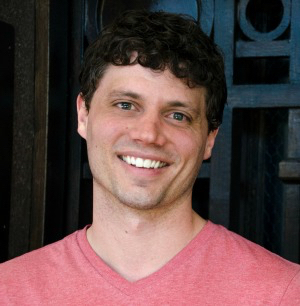
Josh Schukman
Recall from my last piece that social entrepreneurship is a businessperson that creates a profit and purpose-driven organization in which the business and social missions run in tandem. Our social mission, therefore, becomes a key component of our marketing, branding, and success metrics.
Interestingly, many large companies fit the first half of this definition, yet fall short on the latter by failing to tell the story of their social impact. Timberland, for example, is one of the greatest social entrepreneurs of our time. It outfits the uniforms for thousands of City Year corps members, pays their employees for 40 hours of volunteer time annually, and uses its product channels to empower sustainable suppliers. I’m sure you knew of Timberland, but did you know about its social mission? My guess is no.
Traditional companies can no longer afford not to have a story like Timberland’s. We know that 69 percent of millennial consumers want to know the story of businesses using their influence for social good. This, plus the fact that millenials have over $200 billion of buying power at their disposal, should be enough for any business to make the case for telling their cause-based story.
Here are five simple ways that an established company can become a retroactive social entrepreneur:
1.) Develop a social mission that aligns with your business mission. For example, Kansas City-based Affinity Enterprise Group specializes in supporting residential real estate investors, and a key part of their social mission is supporting efforts that restore blighted residential neighborhoods in cities like Detroit and Kansas City. Affinity’s charitable arm also works with River of Refuge, which provides free temporary housing to working families.
2.) Create a shared vision with your team. This begins at the very top. The leadership of an organization must be unified on the social mission that will be branded as part of its core business. That story and the strategies for telling it must be communicated to all teams within the organization so customers receive a consistent story that is apparent with every interaction. Patagonia is an exemplary retroactive social entrepreneur because they tell their story of sustainable fashion and corporate good at every touch point.
3.) Don’t bury your story. I can’t tell you how many times I go to an established company’s website, try to find more about its social mission, and have to dig through 20 pages before I find the soup kitchen it donates to. Don’t do this. Business is too powerful a force for good to not have its story more loudly told. Find a way to authentically tell the story of the good your company is creating for the world.
4.) Get ‘B-Corp.’ certified. B-Corp Certification is essentially the ‘certified organic’ sticker for social entrepreneurs. There are some big companies — Etsy, Ben & Jerry’s, Patagonia and Warby Parker to name a few — who’ve sought this out because it’s a trusted way of telling consumers that you’re part of a new class of business leader. It’s an affordable certification, and a quick way to show customers you take sustainability and social good seriously.
5.) Be authentic. While today’s consumers are more likely to remain loyal to a cause-driven brand, it is also true that the Internet allows us to spot fakers from a mile away. In this article, I’ve shared several compelling business reasons to become a retroactive social entrepreneur, but if you do this strictly for that purpose, you will not succeed in the long run. You must genuinely believe in the story you’re telling and the change you’re creating for it to resonate.
Josh is the founder of Social Change Nation, whose mission and passion is to provide startup social entrepreneurs with the best possible resources and tools for growing their ventures. He hosts a podcast featuring interviews with the world’s leading change agents and creates online content to help startups make a dollar AND a difference.

Featured Business

2015 Startups to Watch
stats here
Related Posts on Startland News
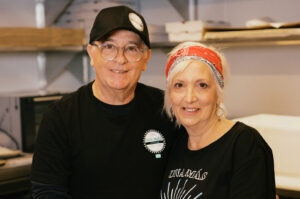
Una Mas Empanadas folds authentic Argentinian flavors into new restaurant spot at Parlor
Expanding Silvia Herrera’s business from a food truck in Gardner to one of Kansas City’s most active and eclectic food hubs brings the Buenos Aires-born entrepreneur — and her grandmother’s 50-year-old handcrafted empanada recipe — to an even wider, more diverse audience, she said. “Our empanadas are more than just food,” Herrera said. “They represent…

It’s not too late to preserve KC’s Black-owned restaurants (or to enjoy Black Feast Week)
The recent closures of Soiree, The Krave, and Privee — Black-owned restaurants that each became a staple of Kansas City’s evolving food scene — leave a clear void that can’t be ignored, said Ryan Sorrell. An initiative to help save local culinary should-be hotspots in similar danger wraps this week, but the work to promote and…

Ancestry.com founder-turned-AI evangelist says rapidly advancing tech can uplift humanity, families
People across the globe are caught in an internet malaise, said Paul Allen, and tech visionaries’ response should be to renew humans’ dependence on faith and family and friendship and local community. One of their most critical tools, he said: decidedly non-human solutions from the rapidly evolving landscape of artificial intelligence. Allen — founder of…

KC filmmaker sees pleasure as a prequel to dystopia hiding ‘In Plain Sight’; His brave new wake-up call
Thomas Rex’s new proof-of-concept film project envisions a near-future world where society is on the verge of totalitarian control, he said, describing a cautionary tale about being unknowingly controlled by a culture of escapism through pleasure and pharmaceuticals. “In Plain Sight” serves as a prelude to Aldous Huxley’s novel “Brave New World,” an acclaimed but…