

C2FO CEO Sandy Kemper talks failure, VCs, maximizing time
May 14, 2015 | Bobby Burch
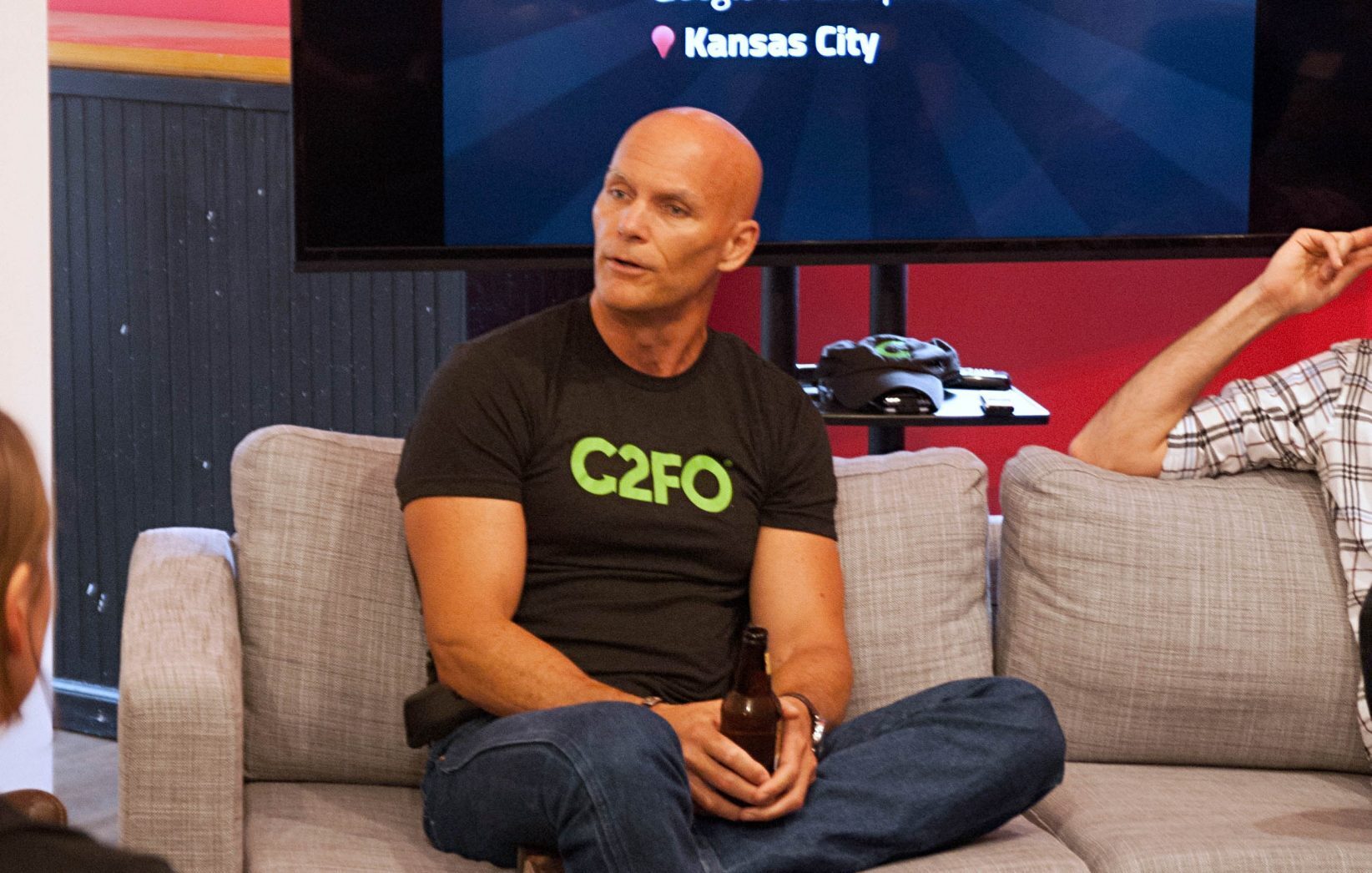
From a Kansas City arena to the founders of one of the nation’s largest financial institutions, the Kemper name is well known in Kansas City.
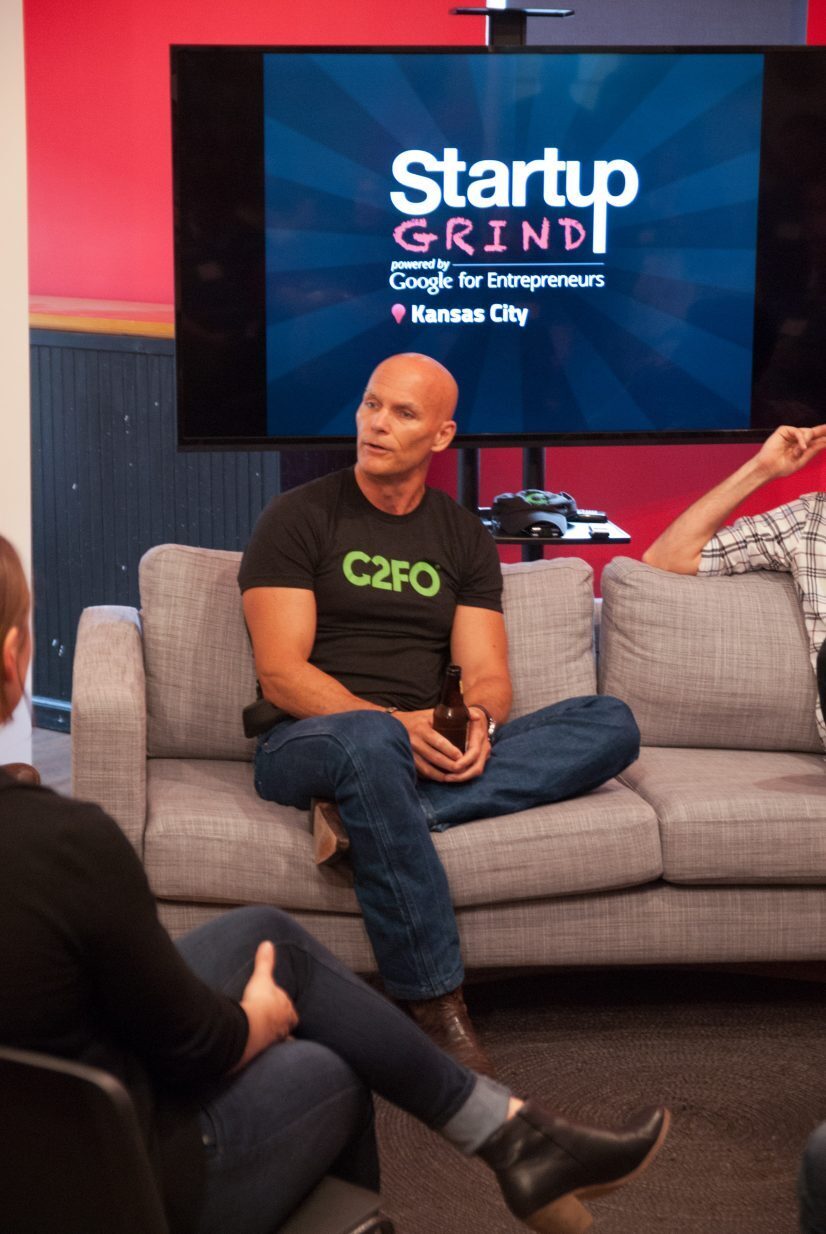
Sandy Kemper
But it’s more than just Sandy Kemper’s name that drew a sold out crowd at Kansas City’s May Startup Grind event.
Kemper leads one of Kansas City’s fastest growing companies — C2FO — that created the world’s largest working capital exchanges. C2FO already has raised roughly $20 million, and in the first quarter of 2015 reported working capital flow of $2.85 billion.
Before founding C2FO, Kemper was CEO of UMB Bank and CEO of UMB Financial, a NASDAQ traded financial services firm with assets of more than twelve billion dollars.
Here are a few tidbits of what Kemper had to say while chatting with entrepreneurs.
On obsessing on failure …
Failure is a great motivator. You’ve got to use it to get yourself going, but if it causes you to pull in, if it causes you to fixate, if you’re perseverating on failure, you’re never going to achieve success. For every moment you think about failure you should have at least had a couple of moments where you’re thinking about what success looks like. … Don’t let failure wind you up so much that it makes you ineffective. You need equal parts fanaticizing about success as you’re worried about failure, because you can get too wrapped up in failure and it will wipe you out.
On venture capital in Kansas City …
I don’t know that you have to have a vibrant venture capital community to have a vibrant entrepreneurial community. I think you can maneuver money up elsewhere — I know it’s harder. I know it’s a huge catalyst to have a venture capital environment locally but I don’t think it’s a prerequisite to entrepreneurial success. We’ve got guys writing $50,000 and $100,000 checks probably more than our fair share for a community this size, and I know there’s a big gap from that and stage B and C money. We’re not going to get B and C money in Kansas City — it’s not going to happen. The best thing we can hope for is killer friends and family networks and lots of people taking pride in the checks they’re writing.
On maximizing one’s time …
We can all be really distracted by the trivial. There’s the 80/20 rule on how you use your time relative to the things that matter, and most of us screw that up. We get it reversed because we spend 80 percent of our time on stuff that doesn’t matter and we spend 20 or 10 percent of our time on stuff that does. We allow things to confuse us or cause us not to be focused. My biggest advice there is to be really good at the painful act of not chasing the shiny object.
On women in technology …
It’s a bummer. My wife and I had this conversation — it’s tough. There’s not enough women on the boards of companies, there’s not enough women engineers, there’s probably a strong percentage of women entrepreneurs just not a lot of women in tech entrepreneurs — certainly not a lot of women coders. And it’s a big issue. I’m really disappointed we don’t have more female engineers in our company. It’s a bummer. … (Use) strength in numbers, strength in unification and unity of cause — so get more and unify a few common themes that are going to make a dent in the universe. Pick a couple things that are really significant and don’t dilute the message. Make those significant platform views heard so that more people will come to your cause.
On his interest in art …
I grew up with great art. I loved it and it was interesting to me. I was spoiled and grew up in a house that had some really cool stuff and I learned about it intellectually. … The reason we did the art fund was because I didn’t have enough money to buy an art collection so I got a bunch of family and friends together and said ‘Here’s an idea. It’s scalable. Museums cost a lot of money and they’ve got big structures, so let’s create a museum without the infrastructure and let’s do it with an economic bias towards creating a return for ourselves.’ Art tends to be a really good asset, but the problem is that most people don’t have enough money to diversify it in a magnificent way across really significant artworks. But if you put 150 families together and everyone puts up a couple hundred thousand dollars … you’ve got a pretty good collection. And since you don’t have the brick and mortar of the museum to be able to eat up your financial returns, you disperse the art to all our members’ homes, which is really cool. … It’s all this cool art you see in the museum that we install and uninstall in your house. And, by the way, we’ve averaged about 13 percent internal rate of return.

Featured Business

2015 Startups to Watch
stats here
Related Posts on Startland News

RX Savings Solutions sale would see the startup acquired for up to $875M in KC’s biggest-ever exit
The McKesson Corporation has agreed to purchase Overland Park-prescribed Rx Savings Solutions in a deal worth nearly $1 billion. McKesson announced Monday that it had entered into an agreement with the prescription pricing startup valued at up to $875 million — more than double the $425 million price tag for which Kansas City-built Backlot Cars…

KC team developing tool to get low-income entrepreneurs online (and it just got a $240K boost)
A collaborative project to “bridge the gap” in Kansas City’s digital divide secured one of the 2022 Heartland Challenge grants from the Ewing Marion Kauffman Foundation. PCs for People Kansas City (formerly Connecting for Good), in partnership with The Usher Garage and No-Where Consultants, will receive $240,000 in funding to be used over two years…

How this KC trucking platform is helping drivers achieve the ‘American Dream’ amid high industry demands, burnout
The COVID-19 pandemic highlighted the importance of truck drivers in the American economy, said Jeff Dema; and Foxpoint is targeting its efforts to ensure that drivers succeed and stay in the demanding industry. “Being a truck driver is a hard job. They’re gone 250 plus nights a year from their home. It requires lots of…

Google’s $100K ‘stamp of approval’ for PlaBook reads like validation for KC-built edtech startup
Kansas City expatriate PlaBook is set to receive $100,000 from Google’s initiative to provide funding to Black-led startups. But for Philip Hickman, it’s not just about the funding, he said. It’s also a credibility boost. “We were happy to receive an investment from Google,” the edtech startup founder said. “It’s a stamp of approval to…